
The Arrest Strategy
The Good Nurse: A True Story of Medicine, Madness, and MurderThis thread follows the tactical conflict over how to stop Cullen, balancing evidentiary caution against the danger that he might return to patient care.
increasing Bearing strength in each event
 decreasing
Bearing strength in each eventdecreasingNo Immediate Charge

No Immediate Charge
Suspicion Is Not Enough
Detectives believed Cullen was dangerous, but the evidence did not definitively tie him to a specific Somerset death. Arresting him too soon risked alerting him and leaving the prosecution without a provable case.
A Killer Still at Large
The team knew Cullen could apply for work at another hospital. They could not simply detain him because of a disturbing history, and ordinary surveillance could not guarantee that he would not harm someone again.
The legal threshold and the practical danger pulled in opposite directions. Investigators had to build a case without losing sight of the patients who might be exposed while they did so.
A Task Force Denied

A Task Force Denied
A Wider Case Proposed
Braun asked Prosecutor Wayne Forrest to bring in other counties and investigative resources. The case crossed jurisdictions and demanded specialized data analysis beyond the capacity of the small local office.
Local Control Maintained
Forrest refused to share the investigation. Braun and Baldwin continued with a small group of Somerset detectives, dividing hospital records, interviews, and background work among themselves.
The decision preserved local control but added pressure to an already complex inquiry. The conflict over resources mirrored the larger struggle to make a medical pattern visible across institutional boundaries.
The Tracking Device

The Tracking Device
Following the Car
With judicial authorization, investigators installed a tracking unit in Cullen’s car after a staged traffic stop. Detectives and officers then monitored his movements around the clock.
Watching Is Not Stopping
The device showed where Cullen went, but it could not establish that he had committed murder or prevent him from applying for hospital work. Surveillance bought information and time, not a lawful basis for indefinite detention.
The measure reflected the investigators’ fear that the clock was still running. They were trying to protect potential patients while assembling evidence that could survive legal scrutiny.
A Warning to Montgomery
A Warning to Montgomery
A New Job Appears
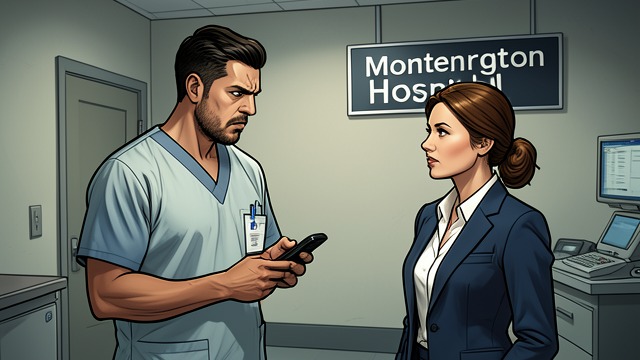
Cullen applied to Montgomery Hospital and was scheduled to begin training. The prospective employment made the danger immediate: the suspect could soon be caring for patients again.
Braun Acts Alone
Tim Braun contacted a hospital vice president and urged her to remove Cullen from the schedule. He could not provide a full public account of the allegations, but invoked his role as a homicide sergeant to make the warning credible.
The call risked legal and professional repercussions, yet waiting could have exposed new patients. Braun chose prevention over institutional caution at a moment when the formal case remained incomplete.
A Dangerous Interrogation

A Dangerous Interrogation
Pressure for a Confession
After arresting Cullen, investigators used prolonged questioning and false or provocative claims to push him toward speaking. Cullen was distressed but did not quickly confess.
The Strategic Disagreement
The prosecutor ended the interrogation before detectives believed it had run its course. They worried that the chance to obtain a confession had been lost and that Cullen would soon have a lawyer.
The confrontation showed the risks of trying to force a breakthrough from a suspect who retained the right to stop speaking. Investigators had to find a way to resume the conversation within legal limits and with Cullen’s own reasons for talking.
October 2003
October 2003
Late October 2003
December 2003
December 2003
